Real Estate Law

Under this section, we share with you some legal issues, advice and quick tips that, we hope, will help you or let you learn more about your rights and obligations.

The articles are general information. In each situation, the application and interpretation of a law, a regulation or a factual situation may differ. It is preferable to consult our team for more information.

Real Estate Law | New Posts

What exactly is the “prescription”?

What exactly is the “prescription”?

Make no mistake, this article will not discuss of the prescriptions that your doctor writes for you following his diagnosis. Instead, this article will explain the legal concept commonly known as "prescription". In law, there are two types of prescription: extinctive...

Undivided co-ownership

Undivided co-ownership

When people say they are co-owners of a property, without knowing it, they are referring to undivided co-ownership, as opposed to divided co-ownership. In practice, being in an undivided co-ownership almost always presupposes a close relationship between the...

Key Neighbourhood Issues

Key Neighbourhood Issues

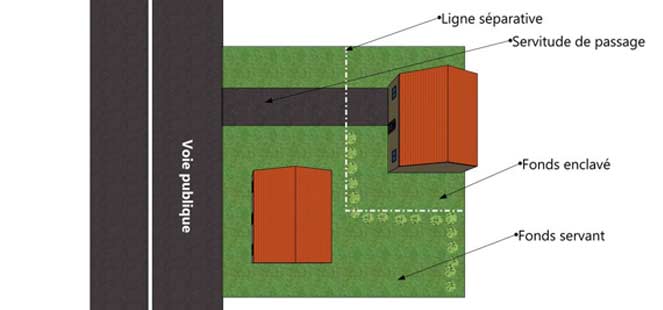
Two-thirds of Canadians own a building, whether it is a house, a condo, a chalet, a farm, etc. Real estate is an area where it is relatively safe to invest, because of its stability and tangibility, as opposed to the stock market, for example. However, every property...

The Legal Construction Hypothec

The Legal Construction Hypothec

The construction industry is difficult and risky: many companies can become insolvent and have to close shop after a project that has gone wrong. In this context, the law gives construction contractors an important privilege, namely the ability to register a notice of...

Property Transfer Tax (welcome tax)

Property Transfer Tax (welcome tax)

The law provides that real estate transfer fees must be paid whenever a transfer of immovable property occurs, with certain exceptions. This is commonly known as the welcome tax and it is collected by the municipality. Many exceptions exist in the law and...